Last Updated: November 15, 2026
Quick Summary
To create a home office in a tiny apartment, measure your intended spot and daily traffic flow before buying anything, then choose a space-saving desk that matches how you actually work. Use corners, walls, and vertical storage, and separate the workspace with visual cues rather than walls.
- Allow at least 60cm of desktop depth, or 70-80cm if you use a monitor.
- Leave roughly 75-90cm behind the desk edge for chair clearance.
- Keep at least 60cm of clear floor on the main walkway past the desk.
- A laptop stand plus external keyboard is the cheapest ergonomic upgrade.
- Route cables along walls and under furniture, never across walkways or under rugs.
Short on space but need a desk?CLU Living curates compact desks, chairs and storage built for tiny apartments.
Shop Home Office
Table of Contents
Planning Your Home Office Before You Buy Anything
Creating a home office in a tiny apartment starts with a tape measure, not a shopping cart.
Measure the width, depth, and wall height of your intended spot, then walk your daily route.
Don't buy a compact desk first and find a spot later.
For a proven room-by-room method, see this guide on how to maximize apartment space before you commit to a layout.
Small Apartment Home Office Ideas That Actually Fit
Small apartment home office ideas work best when they borrow space rather than claim it. Think corners, walls, and furniture that does two jobs, not a dedicated room you don't have.
Use corners and dead space
Corners are the most underused real estate in a tiny apartment. A corner desk or slim floating shelf turns wasted floor into a work zone, and the walls above become free storage.
Look for dead space too: the strip beside the fridge, the nook under a window, the gap behind the sofa. A narrow console or wall-mounted ledge can host a laptop and lamp without eating walking room.
Renter-friendly fixes that leave no damage
Renters need solutions that come down cleanly at moving time. Freestanding shelving, tension rods, and furniture that leans or clamps avoids drilling altogether.
- Freestanding bookshelves and leaning ladders
- Adhesive hooks rated for the weight you're hanging
- Furniture sliders so pieces reconfigure without scratches
If you're weighing up a desk that doubles as storage, this guide to multi functional furniture for small spaces covers the options in detail.
Choosing a Space-Saving Desk for Small Spaces
The right space-saving desk matches how you actually work, not what looks smallest online. A fold-down desk suits occasional laptop sessions; a full desk with built-in storage suits daily, screen-heavy work. The decision comes down to four measurements and one honest habit check.
Measure before you shortlist
Grab a tape measure and note these four numbers for any candidate spot:
-
Desktop depth: allow at least 60cm for a laptop and separate keyboard, or 70-80cm if you use a monitor. Anything shallower forces your screen too close.
-
Desktop width: 100cm is a workable minimum for a laptop plus a notepad; 120cm if you run a second screen.
-
Chair clearance: you need roughly 75-90cm behind the desk edge for a chair to pull out and for you to stand up without clipping a wall or bed.
Match the desk type to your routine
-
Fold-down or wall-mounted: frees floor space the moment you finish work, but you lose the surface for storage and must clear it daily. Best for occasional laptop work or a second workspace.
-
Compact desk with drawers: keeps documents, chargers, and a headset out of sight, but the footprint is fixed and drawers add depth. Best for daily work with paperwork.
-
Corner desk: uses dead corner space and gives a wider working arc, but can block the only walkway in a studio if the corner sits on a traffic route.
A common pattern is buying for the desk you wish you had rather than the work you actually do.
Watch out: a desk that fits the gap but leaves no chair clearance turns a workable corner into a daily obstacle, measure the chair pull-out zone, not just the desk footprint.
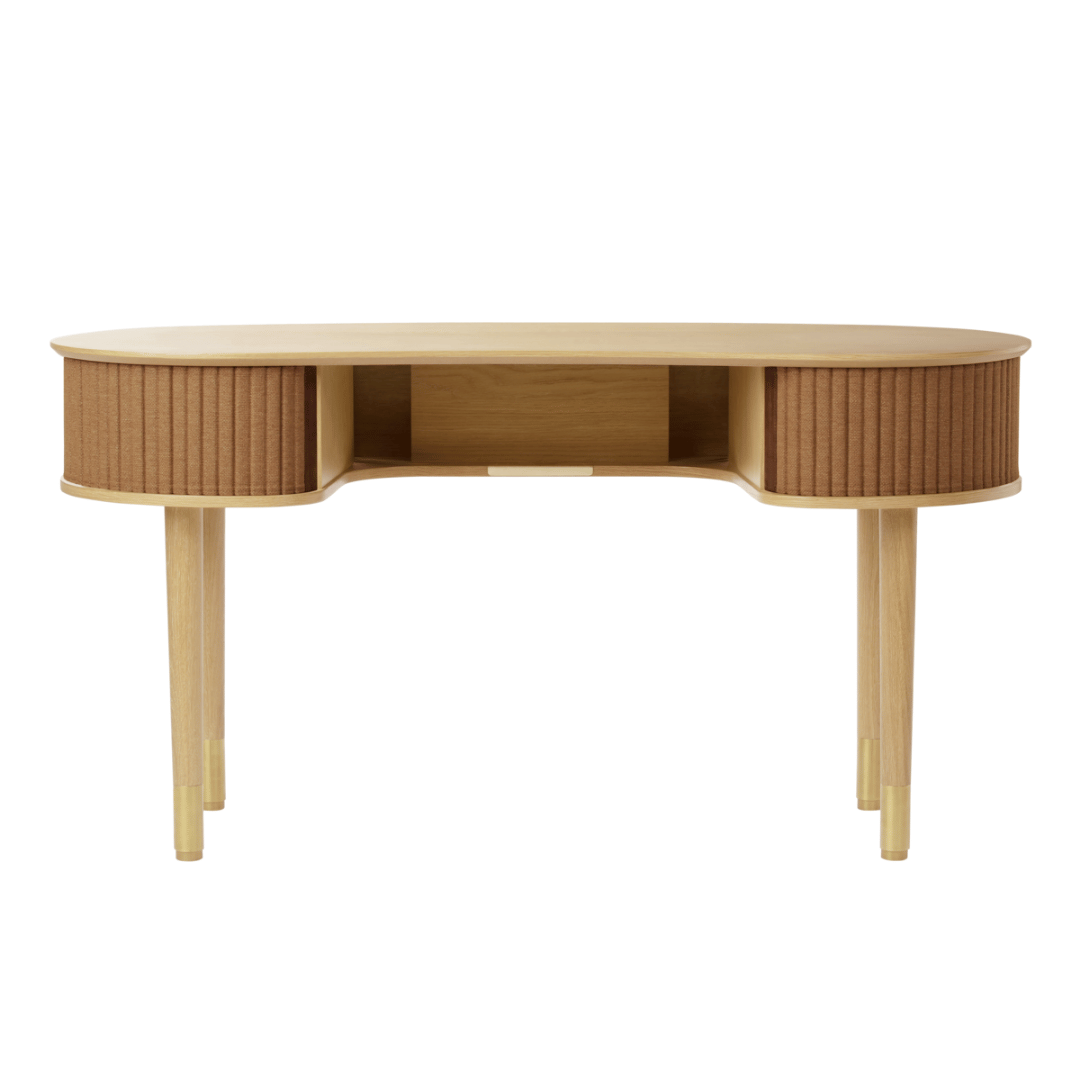
For a piece that combines a compact footprint with concealed storage, the Audacious Desk has sliding fabric tambour doors, built-in organisers, a headphone hook, and a back panel that hides cords, with adjustable leg height to suit most office chairs.
Four measurements decide whether a desk actually fits your apartment.
Measurement |
Value |
Note |
Desktop depth |
At least 60cm |
70-80cm if you use a monitor |
Desktop width |
100cm minimum |
120cm for a second screen |
Chair clearance |
Roughly 75-90cm |
Behind the desk edge |
Walkway |
At least 60cm |
Clear floor on the main route |
Desk and workspace measurements for a small home office
Desktop depth (laptop) 60cm
Desktop depth (monitor) 70-80cm
Desktop width (laptop) 100cm
Desktop width (second screen) 120cm
How to Separate a Workspace in a Studio Apartment
Separating a workspace in a studio apartment comes down to visual cues, not walls.
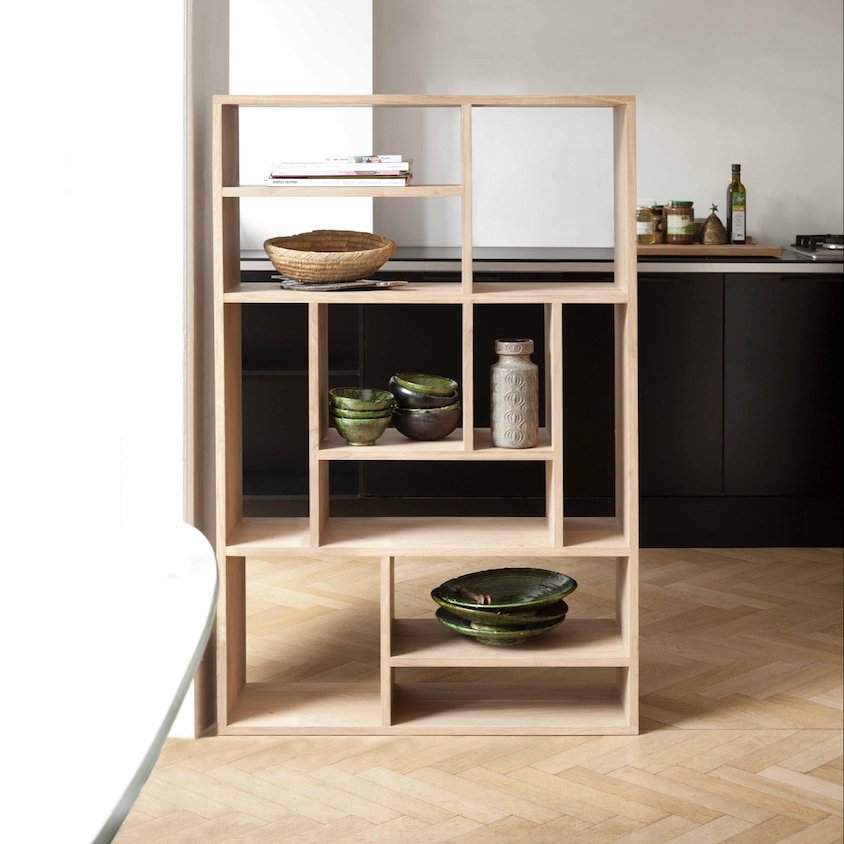
Room dividers do the heavy lifting. A low bookshelf keeps sightlines open while marking the boundary; a tall plant or screen adds privacy without blocking light.
Renters who can't drill have more options than they think. This guide on how to zone a studio apartment without rugs walks through divider-free techniques that leave no marks.
Small Home Office Storage Ideas That Clear the Desk
Small home office storage ideas should get clutter off the desktop and onto the walls. Vertical space is the cheapest square metre you'll ever gain.
- Floating shelves above the desk for books and boxes
- A slim storage cart tucked beside or under the desk
- Wall hooks for headphones, bags, and cables
The Ribbon Floating Bookshelf holds up to 25kg and groups in multiples for a clean wall run. For floor-level clutter, a slim storage cart rolls into gaps a cabinet can't reach.
Ergonomics, Power and Noise in a Compact Workspace
Ergonomics, power, and noise decide whether a compact workspace is comfortable or punishing. The practical gap is how to hold posture, keep devices connected, and protect work-life boundaries when the room is also your living room, bedroom, and dining room.
Ergonomics when the furniture is constrained
You do not need a full ergonomic suite, but you do need three relationships right:
-
Screen height: the top third of the screen should sit at or just below eye level. A laptop on a stand plus an external keyboard gets you there without a monitor arm; a stack of books under a monitor is a legitimate short-term fix.
-
Elbow angle: forearms roughly parallel to the floor, elbows near 90 degrees. If the desk is fixed-height and too high, a footrest or cushion under the seat raises you relative to the desk; if too low, a keyboard tray or thicker seat pad closes the gap.
-
Chair fit: seat depth should leave two to three fingers of space behind your knees, and feet should rest flat. An adjustable chair beats a fixed stool because one chair can serve desk, dining, and guests. For a compact option, see the Riley Office Chair Khaki Grey.
Lighting matters as much as the chair. Put the task lamp to the side of your dominant hand so you don't cast a shadow on the keyboard, and angle the screen away from a window to cut glare rather than fighting it with brightness.
Watch out: a laptop-only setup used for six-hour days is the most common cause of neck and wrist strain in small apartments, a stand and separate keyboard are the cheapest ergonomic upgrade you can make.
Power, Wi-Fi, and cable routing
Count your plugs before you place the desk: laptop, monitor, lamp, phone charger, router or extender, and anything seasonal. A single power strip mounted under the desktop keeps cords off the floor and out of walkways; a surge-protected strip is worth the small extra cost in older buildings.
-
Outlets: if the only power point is across the room, run a single extension along a wall edge and secure it with cable clips rather than crossing a doorway.
-
Wi-Fi: in a small apartment the router is often in the hallway or living room. A mesh node or powerline adapter near the desk usually beats a weak signal through two walls.
-
Cable routing: use adhesive clips or an under-desk tray so charging cables drop straight down rather than looping across the desktop. Label the ends you unplug often.
Watch out: a cable run across a walkway is a trip hazard and a rental-inspection issue, route along walls and under furniture, and never under a rug where it can overheat.
Noise, privacy, and work-life boundaries
Hard floors bounce sound, so a rug, heavy curtain, or soft furnishing absorbs calls.
Boundaries are a routine, not a wall.
A common mistake is ignoring cable management and boundaries until cords become a trip hazard and work bleeds into every evening. Fix both on day one.
A tiny apartment can still hold a workspace that looks good and works hard.
Frequently Asked Questions
How do you create a home office in a tiny apartment?
Start by measuring the space and choosing one dedicated zone, such as a corner or an alcove, rather than spreading work items across the apartment. Pick a desk that suits the footprint, like a compact or floating design, then add vertical storage so the work surface stays clear. A room divider, rug or shelving unit can mark the boundary between work and living areas, which helps you switch off at the end of the day.
Where should you put a desk in a small apartment?
The best spot is usually a corner or an unused stretch of wall where foot traffic does not pass behind your chair. Look at where natural light falls and avoid placing a screen so it faces a bright window. If you work on video calls, position the desk so your background is a wall or shelving rather than a busy living area. Measure the depth you need for a chair and clearance before committing.
What furniture works best for a small home office?
Look for pieces that do more than one job. A compact desk with built-in cable management and storage keeps clutter out of sight, while a floating shelf or wall-mounted unit uses vertical space instead of floor area. A side table can double as a laptop stand when you move to the sofa. Choose solid materials and adjustable leg heights so the piece stays comfortable and lasts through several moves.
How can you hide a home office when you are not working?
Concealment comes down to storage and screening. A desk with tambour or sliding doors lets you close away paperwork and devices at the end of the day. A folding screen or a tall shelving unit can block the workspace from view in a studio. Keep cables routed behind a back panel so the area looks tidy when closed, and store stationery in drawers rather than on the desktop.




How to Create a Home Office in a Tiny Apartment
Last Updated: November 15, 2026
Quick Summary
To create a home office in a tiny apartment, measure your intended spot and daily traffic flow before buying anything, then choose a space-saving desk that matches how you actually work. Use corners, walls, and vertical storage, and separate the workspace with visual cues rather than walls.
Table of Contents
Planning Your Home Office Before You Buy Anything
Creating a home office in a tiny apartment starts with a tape measure, not a shopping cart.
Measure the width, depth, and wall height of your intended spot, then walk your daily route.
Don't buy a compact desk first and find a spot later.
For a proven room-by-room method, see this guide on how to maximize apartment space before you commit to a layout.
Small Apartment Home Office Ideas That Actually Fit
Small apartment home office ideas work best when they borrow space rather than claim it. Think corners, walls, and furniture that does two jobs, not a dedicated room you don't have.
Use corners and dead space
Corners are the most underused real estate in a tiny apartment. A corner desk or slim floating shelf turns wasted floor into a work zone, and the walls above become free storage.
Look for dead space too: the strip beside the fridge, the nook under a window, the gap behind the sofa. A narrow console or wall-mounted ledge can host a laptop and lamp without eating walking room.
Renter-friendly fixes that leave no damage
Renters need solutions that come down cleanly at moving time. Freestanding shelving, tension rods, and furniture that leans or clamps avoids drilling altogether.
If you're weighing up a desk that doubles as storage, this guide to multi functional furniture for small spaces covers the options in detail.
Choosing a Space-Saving Desk for Small Spaces
The right space-saving desk matches how you actually work, not what looks smallest online. A fold-down desk suits occasional laptop sessions; a full desk with built-in storage suits daily, screen-heavy work. The decision comes down to four measurements and one honest habit check.
Measure before you shortlist
Grab a tape measure and note these four numbers for any candidate spot:
Match the desk type to your routine
A common pattern is buying for the desk you wish you had rather than the work you actually do.
Watch out: a desk that fits the gap but leaves no chair clearance turns a workable corner into a daily obstacle, measure the chair pull-out zone, not just the desk footprint.
For a piece that combines a compact footprint with concealed storage, the Audacious Desk has sliding fabric tambour doors, built-in organisers, a headphone hook, and a back panel that hides cords, with adjustable leg height to suit most office chairs.
Four measurements decide whether a desk actually fits your apartment.
Measurement
Value
Note
Desktop depth
At least 60cm
70-80cm if you use a monitor
Desktop width
100cm minimum
120cm for a second screen
Chair clearance
Roughly 75-90cm
Behind the desk edge
Walkway
At least 60cm
Clear floor on the main route
Desk and workspace measurements for a small home office
How to Separate a Workspace in a Studio Apartment
Separating a workspace in a studio apartment comes down to visual cues, not walls.
Room dividers do the heavy lifting. A low bookshelf keeps sightlines open while marking the boundary; a tall plant or screen adds privacy without blocking light.
Renters who can't drill have more options than they think. This guide on how to zone a studio apartment without rugs walks through divider-free techniques that leave no marks.
Small Home Office Storage Ideas That Clear the Desk
Small home office storage ideas should get clutter off the desktop and onto the walls. Vertical space is the cheapest square metre you'll ever gain.
The Ribbon Floating Bookshelf holds up to 25kg and groups in multiples for a clean wall run. For floor-level clutter, a slim storage cart rolls into gaps a cabinet can't reach.
Ergonomics, Power and Noise in a Compact Workspace
Ergonomics, power, and noise decide whether a compact workspace is comfortable or punishing. The practical gap is how to hold posture, keep devices connected, and protect work-life boundaries when the room is also your living room, bedroom, and dining room.
Ergonomics when the furniture is constrained
You do not need a full ergonomic suite, but you do need three relationships right:
Lighting matters as much as the chair. Put the task lamp to the side of your dominant hand so you don't cast a shadow on the keyboard, and angle the screen away from a window to cut glare rather than fighting it with brightness.
Watch out: a laptop-only setup used for six-hour days is the most common cause of neck and wrist strain in small apartments, a stand and separate keyboard are the cheapest ergonomic upgrade you can make.
Power, Wi-Fi, and cable routing
Count your plugs before you place the desk: laptop, monitor, lamp, phone charger, router or extender, and anything seasonal. A single power strip mounted under the desktop keeps cords off the floor and out of walkways; a surge-protected strip is worth the small extra cost in older buildings.
Watch out: a cable run across a walkway is a trip hazard and a rental-inspection issue, route along walls and under furniture, and never under a rug where it can overheat.
Noise, privacy, and work-life boundaries
Hard floors bounce sound, so a rug, heavy curtain, or soft furnishing absorbs calls.
Boundaries are a routine, not a wall.
A common mistake is ignoring cable management and boundaries until cords become a trip hazard and work bleeds into every evening. Fix both on day one.
A tiny apartment can still hold a workspace that looks good and works hard.
Frequently Asked Questions
How do you create a home office in a tiny apartment?
Start by measuring the space and choosing one dedicated zone, such as a corner or an alcove, rather than spreading work items across the apartment. Pick a desk that suits the footprint, like a compact or floating design, then add vertical storage so the work surface stays clear. A room divider, rug or shelving unit can mark the boundary between work and living areas, which helps you switch off at the end of the day.
Where should you put a desk in a small apartment?
The best spot is usually a corner or an unused stretch of wall where foot traffic does not pass behind your chair. Look at where natural light falls and avoid placing a screen so it faces a bright window. If you work on video calls, position the desk so your background is a wall or shelving rather than a busy living area. Measure the depth you need for a chair and clearance before committing.
What furniture works best for a small home office?
Look for pieces that do more than one job. A compact desk with built-in cable management and storage keeps clutter out of sight, while a floating shelf or wall-mounted unit uses vertical space instead of floor area. A side table can double as a laptop stand when you move to the sofa. Choose solid materials and adjustable leg heights so the piece stays comfortable and lasts through several moves.
How can you hide a home office when you are not working?
Concealment comes down to storage and screening. A desk with tambour or sliding doors lets you close away paperwork and devices at the end of the day. A folding screen or a tall shelving unit can block the workspace from view in a studio. Keep cables routed behind a back panel so the area looks tidy when closed, and store stationery in drawers rather than on the desktop.