Last Updated: November 9, 2026
Quick Summary
To mix textures in a neutral living room, start with a warm, cool or mixed base tone, then build three or four tone-on-tone layers before adding contrast. Work in five layers from the floor up: rug, upholstery, window treatments, cushions and organic accents. Balance every smooth surface with a rough one.
- Choose warm, cool or mixed undertones first, then hold a fabric swatch against your wall in daylight.
- Build three or four tone-on-tone layers before adding a dark contrast piece.
- Layer from the floor up: wool rug, upholstery, curtains, cushions, then organic accents.
- Aim for roughly two soft textures to every one hard texture in the room.
- In small rooms, layer texture vertically and leave a visible floor border around the rug.
Ready to layer your neutral living room?CLU Living curates furniture and homewares for compact spaces, with design help to pull it together.
Shop cushions
Table of Contents
Start With a Neutral Base Before You Layer Texture
Learning how to mix textures in a neutral living room starts with one rule: pick your base tone before you buy a single cushion. A common mistake is layering beautiful textures over a base that fights them.
A neutral base is the calm backdrop that lets texture do the talking.
Choose Warm or Cool Undertones First
Undertones decide which textures will feel right in the room. Warm undertones lean towards cream, oatmeal, sand and soft beige. Cool undertones lean towards grey, stone and soft white.
Hold a fabric swatch against your wall in daylight. If it looks flat or grey beside the wall, the undertones clash. If it looks settled and calm, you have your base.
-
Warm base: pair with wool, timber, rattan and linen in oatmeal and ecru
-
Cool base: pair with cotton velvet, matte plaster finishes and pale timber
-
Mixed base: keep 80% of the room in one undertone and let the rest whisper
Build Tone-on-Tone Before Adding Contrast
Tone-on-tone layering means stacking shades from the same family before you introduce anything darker. It is the difference between a room that looks designed and one that looks assembled.
Start with your largest surface. Then step one shade lighter or darker with each new layer. A cream sofa, an oatmeal cushion, an ecru throw.
Only add contrast once three or four tone-on-tone layers are in place. That final dark note, a charcoal basket or a deep timber side table, lands with far more impact against a settled base.
How to Add Texture to a Living Room in Five Layers
The most reliable way to add texture to a living room is to work in five layers, from the floor up. Each layer adds a different tactile quality, and together they create depth without clutter.
Layer 1 to 3: Floor, Upholstery, Window
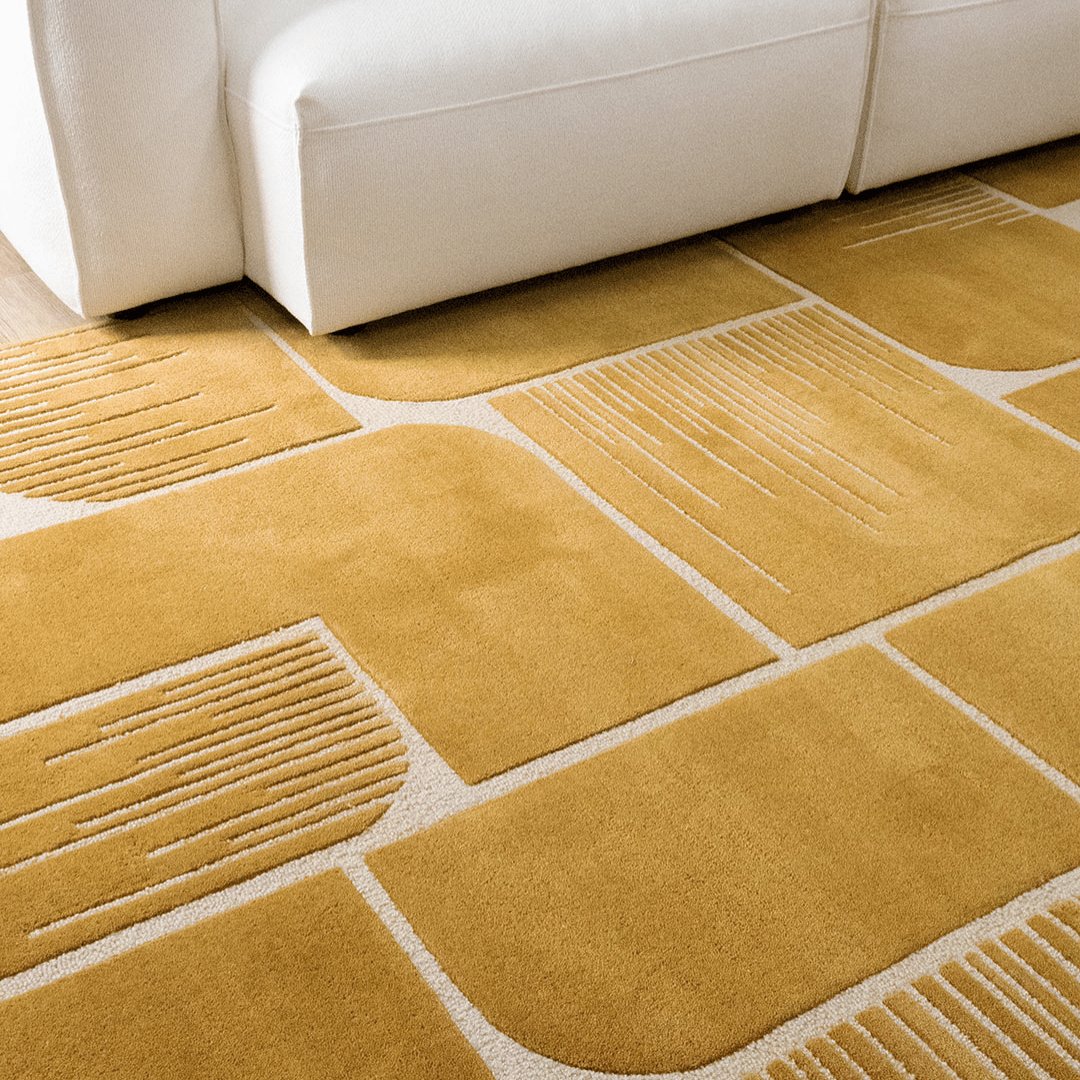
Layer 1 is the floor. A wool area rug gives you the softest, most forgiving texture underfoot. The Cascade Wool Rug | Golden brings a sculptural geometric pattern and rich texture in a warm caramel and beige blend, made from 100% New Zealand wool with a cotton backing.
Layer 2 is upholstery. This is your biggest texture decision. Linen reads relaxed and breathable. Cotton velvet reads plush and rich. Pick one dominant feel and let the other layers support it.
Layer 3 is the window. Curtains in linen or a cotton blend soften hard edges and filter light. Sheer layers add a quiet, gauzy texture that heavier fabrics cannot.
Layer 4 and 5: Cushions and Organic Accents
Layer 4 is cushions, where you can afford to be bold. Mix a smooth finish with a rough one and a matte with a sheen.
Layer 5 is organic accents. Woven baskets, driftwood, rattan and a plaster lamp base add the final tactile note and stop a neutral room from feeling flat.
Layer |
Surface |
Texture to Add |
Example |
1 |
Floor |
Soft, dense pile |
Wool area rug |
2 |
Upholstery |
Relaxed or plush |
Linen sofa |
3 |
Window |
Light-filtering |
Linen curtains |
4 |
Cushions |
Mixed weave and sheen |
Velvet and slub cotton |
5 |
Accents |
Rough and organic |
Rattan basket, plaster lamp |
Natural Materials for Living Room Decor That Age Well
Natural materials for living room decor are a popular choice for many homes. Linen softens, wool settles, and timber develops a patina. But each fibre behaves differently under daily life, and choosing confidently means knowing how each one wears, cleans and copes with a household.
The materials worth building around, and what to expect from each:
-
Linen for upholstery and curtains. Breathable and relaxed, and it softens with every wash. It creases readily, which is part of its character, but it also fades in harsh direct sun, so rotate curtains or line them in a sunny room.
-
Wool for rugs and throws. Dense, hard-wearing and naturally resilient, which is why it holds its shape in high-traffic zones. Wool can shed loose fibres in the first few weeks. Vacuum gently and blot spills rather than rub.
-
Cotton for cushions. Soft to touch and available in neutral tones, which suits a calm, neutral scheme.
Natural fibres need a little care to stay looking their best, and the right choice depends on the household.
If life is busy, put the delicate fibres up high and out of the main traffic path.
Neutral Living Room Ideas for Small, Rented and Budget Spaces
Neutral living room ideas work hardest in small, rented or budget-limited spaces, because texture adds interest without adding bulk. You do not need more furniture, you need more tactile variety, applied in a deliberate order so the room gains depth without gaining clutter.
Small rooms: layer vertically and keep the floor clear
In a compact room, texture competes for the same horizontal surfaces, so move it up the walls. A tall woven basket, a floor lamp with a textured shade, and a long bolster cushion on the sofa arm all draw the eye upward without eating floor space.
Watch out: stacking several tall textured pieces in one corner shrinks a small room rather than opening it. Spread vertical texture across two or three corners instead.
Rentals: choose texture that travels
Renters should lean on pieces that move easily and leave no trace. Cushions, throws, rugs and baskets all travel to the next place, and none of them require a drill. Choose a rug in a standard size so it suits more than one layout, and favour cushion covers you can swap rather than fixed upholstery. For walls, a leaning mirror or a large framed textile adds texture without fixings.
Budget: buy texture in the accessories first
On a tight budget, buy texture in the accessories first. One textured cushion and a woven basket change a room more than a new sofa does, because they sit at eye level and hand level where texture is read most. Add the larger pieces when the budget allows, and spend on the rug last, since a good wool rug outlasts several rounds of cushions and anchors everything above it.
The one-layer-at-a-time method
Buy one layer at a time and live with it for a week before adding the next.
A quick constraint checklist
-
Small room: layer vertically, keep a floor border around the rug, spread tall pieces across corners
-
Rental: cushions, throws, rugs and baskets first; standard rug sizes; no-fix wall texture
-
Budget: accessories before furniture; rug last; one layer per week
How to Make a Neutral Room Feel Cosy Without Clutter
Making a neutral room feel cosy comes down to balancing finishes and editing as the light changes. Cosy is not about more things. It is about the right contrast between soft and hard, smooth and rough.
Balance Smooth and Rough, Matte and Tactile
Use a simple texture balance formula: for every smooth surface, add one rough one. A glass coffee table wants a woven basket nearby. A sleek metal lamp wants a boucle cushion beside it. A leather sofa wants a wool throw over the arm.
Aim for a rough guide of two soft textures to every one hard texture. That ratio keeps a room feeling warm without becoming heavy.
-
Smooth: glass, metal, leather, polished timber
-
Rough: jute, rattan, boucle, slub cotton
-
Matte: plaster, linen, unglazed ceramic
Edit the Room as the Light Changes
Texture looks different at 9am and 9pm. Natural daylight reveals weave and grain. Evening lamplight flattens detail and deepens shadow.
Check your room in both conditions.
Then edit. Remove one accessory for every two you add. A neutral room should feel collected, not crowded.
Book a Design Consultation to Pull Your Room Together
Pulling five layers into one cohesive room takes an eye for tone, scale and light. CLU Living's Interior Designer service helps you plan the layers before you buy, so every piece fits your space and your palette.
The team can help you plan your room's layers before you buy. You can book a consultation online.
Start with your base tone. Add one layer at a time. Let the texture do the work.
A neutral living room only feels finished when the textures are doing their job.
Frequently Asked Questions
How many textures should you use in a neutral living room?
Aim for five to seven distinct textures across the room rather than a strict count. Cover one soft surface such as wool or boucle, one smooth finish such as leather or plaster, one rough or woven finish such as jute or rattan, and one tactile accent such as a feather-filled cushion. Beyond seven, the eye stops reading the room as calm and starts reading it as busy. If a piece does not add a new texture or serve a purpose, leave it out.
Can you mix different fabrics in a neutral living room?
Yes, and mixing fabrics is what stops a neutral living room looking flat. Keep the colour family close and let the fabric do the work. Pair a cotton-velvet cushion with a slub-weave bolster and a smooth linen sofa, for example. Vary the scale too: a large plain weave next to a small organic pattern reads as collected rather than matched. Feather inserts help softer fabrics hold their shape so the mix still looks considered.
How do you stop a neutral living room from looking flat?
Flatness comes from too many surfaces at the same sheen and the same tone. Introduce contrast in three places: finish, pile height and shape. A 17mm wool pile rug under a low-sheen cotton sofa, a matte plaster lamp beside a metal frame, and a round cushion against a rectangular one all create shadow lines the eye reads as depth. Lighting matters too, because texture only shows where light rakes across it.
How do you make a neutral room feel cosy in a rental?
Work with pieces you can take with you. A large area rug covers cold or dated flooring, long cushions add softness to a landlord's sofa, and woven baskets hide clutter without new joinery. Choose feather-filled cushions and a wool rug, then layer a throw over the arm of the sofa. None of it needs fixing to a wall, so the whole scheme moves with you when the lease ends.




8 Ways to Mix Textures in a Neutral Living Room
Last Updated: November 9, 2026
Quick Summary
To mix textures in a neutral living room, start with a warm, cool or mixed base tone, then build three or four tone-on-tone layers before adding contrast. Work in five layers from the floor up: rug, upholstery, window treatments, cushions and organic accents. Balance every smooth surface with a rough one.
Table of Contents
Start With a Neutral Base Before You Layer Texture
Learning how to mix textures in a neutral living room starts with one rule: pick your base tone before you buy a single cushion. A common mistake is layering beautiful textures over a base that fights them.
A neutral base is the calm backdrop that lets texture do the talking.
Choose Warm or Cool Undertones First
Undertones decide which textures will feel right in the room. Warm undertones lean towards cream, oatmeal, sand and soft beige. Cool undertones lean towards grey, stone and soft white.
Hold a fabric swatch against your wall in daylight. If it looks flat or grey beside the wall, the undertones clash. If it looks settled and calm, you have your base.
Build Tone-on-Tone Before Adding Contrast
Tone-on-tone layering means stacking shades from the same family before you introduce anything darker. It is the difference between a room that looks designed and one that looks assembled.
Start with your largest surface. Then step one shade lighter or darker with each new layer. A cream sofa, an oatmeal cushion, an ecru throw.
Only add contrast once three or four tone-on-tone layers are in place. That final dark note, a charcoal basket or a deep timber side table, lands with far more impact against a settled base.
How to Add Texture to a Living Room in Five Layers
The most reliable way to add texture to a living room is to work in five layers, from the floor up. Each layer adds a different tactile quality, and together they create depth without clutter.
Layer 1 to 3: Floor, Upholstery, Window
Layer 1 is the floor. A wool area rug gives you the softest, most forgiving texture underfoot. The Cascade Wool Rug | Golden brings a sculptural geometric pattern and rich texture in a warm caramel and beige blend, made from 100% New Zealand wool with a cotton backing.
Layer 2 is upholstery. This is your biggest texture decision. Linen reads relaxed and breathable. Cotton velvet reads plush and rich. Pick one dominant feel and let the other layers support it.
Layer 3 is the window. Curtains in linen or a cotton blend soften hard edges and filter light. Sheer layers add a quiet, gauzy texture that heavier fabrics cannot.
Layer 4 and 5: Cushions and Organic Accents
Layer 4 is cushions, where you can afford to be bold. Mix a smooth finish with a rough one and a matte with a sheen.
Layer 5 is organic accents. Woven baskets, driftwood, rattan and a plaster lamp base add the final tactile note and stop a neutral room from feeling flat.
Layer
Surface
Texture to Add
Example
1
Floor
Soft, dense pile
Wool area rug
2
Upholstery
Relaxed or plush
Linen sofa
3
Window
Light-filtering
Linen curtains
4
Cushions
Mixed weave and sheen
Velvet and slub cotton
5
Accents
Rough and organic
Rattan basket, plaster lamp
Natural Materials for Living Room Decor That Age Well
Natural materials for living room decor are a popular choice for many homes. Linen softens, wool settles, and timber develops a patina. But each fibre behaves differently under daily life, and choosing confidently means knowing how each one wears, cleans and copes with a household.
The materials worth building around, and what to expect from each:
Natural fibres need a little care to stay looking their best, and the right choice depends on the household.
If life is busy, put the delicate fibres up high and out of the main traffic path.
Neutral Living Room Ideas for Small, Rented and Budget Spaces
Neutral living room ideas work hardest in small, rented or budget-limited spaces, because texture adds interest without adding bulk. You do not need more furniture, you need more tactile variety, applied in a deliberate order so the room gains depth without gaining clutter.
Small rooms: layer vertically and keep the floor clear
In a compact room, texture competes for the same horizontal surfaces, so move it up the walls. A tall woven basket, a floor lamp with a textured shade, and a long bolster cushion on the sofa arm all draw the eye upward without eating floor space.
Watch out: stacking several tall textured pieces in one corner shrinks a small room rather than opening it. Spread vertical texture across two or three corners instead.
Rentals: choose texture that travels
Renters should lean on pieces that move easily and leave no trace. Cushions, throws, rugs and baskets all travel to the next place, and none of them require a drill. Choose a rug in a standard size so it suits more than one layout, and favour cushion covers you can swap rather than fixed upholstery. For walls, a leaning mirror or a large framed textile adds texture without fixings.
Budget: buy texture in the accessories first
On a tight budget, buy texture in the accessories first. One textured cushion and a woven basket change a room more than a new sofa does, because they sit at eye level and hand level where texture is read most. Add the larger pieces when the budget allows, and spend on the rug last, since a good wool rug outlasts several rounds of cushions and anchors everything above it.
The one-layer-at-a-time method
Buy one layer at a time and live with it for a week before adding the next.
A quick constraint checklist
How to Make a Neutral Room Feel Cosy Without Clutter
Making a neutral room feel cosy comes down to balancing finishes and editing as the light changes. Cosy is not about more things. It is about the right contrast between soft and hard, smooth and rough.
Balance Smooth and Rough, Matte and Tactile
Use a simple texture balance formula: for every smooth surface, add one rough one. A glass coffee table wants a woven basket nearby. A sleek metal lamp wants a boucle cushion beside it. A leather sofa wants a wool throw over the arm.
Aim for a rough guide of two soft textures to every one hard texture. That ratio keeps a room feeling warm without becoming heavy.
Edit the Room as the Light Changes
Texture looks different at 9am and 9pm. Natural daylight reveals weave and grain. Evening lamplight flattens detail and deepens shadow.
Check your room in both conditions.
Then edit. Remove one accessory for every two you add. A neutral room should feel collected, not crowded.
Book a Design Consultation to Pull Your Room Together
Pulling five layers into one cohesive room takes an eye for tone, scale and light. CLU Living's Interior Designer service helps you plan the layers before you buy, so every piece fits your space and your palette.
The team can help you plan your room's layers before you buy. You can book a consultation online.
Start with your base tone. Add one layer at a time. Let the texture do the work.
A neutral living room only feels finished when the textures are doing their job.
Frequently Asked Questions
How many textures should you use in a neutral living room?
Aim for five to seven distinct textures across the room rather than a strict count. Cover one soft surface such as wool or boucle, one smooth finish such as leather or plaster, one rough or woven finish such as jute or rattan, and one tactile accent such as a feather-filled cushion. Beyond seven, the eye stops reading the room as calm and starts reading it as busy. If a piece does not add a new texture or serve a purpose, leave it out.
Can you mix different fabrics in a neutral living room?
Yes, and mixing fabrics is what stops a neutral living room looking flat. Keep the colour family close and let the fabric do the work. Pair a cotton-velvet cushion with a slub-weave bolster and a smooth linen sofa, for example. Vary the scale too: a large plain weave next to a small organic pattern reads as collected rather than matched. Feather inserts help softer fabrics hold their shape so the mix still looks considered.
How do you stop a neutral living room from looking flat?
Flatness comes from too many surfaces at the same sheen and the same tone. Introduce contrast in three places: finish, pile height and shape. A 17mm wool pile rug under a low-sheen cotton sofa, a matte plaster lamp beside a metal frame, and a round cushion against a rectangular one all create shadow lines the eye reads as depth. Lighting matters too, because texture only shows where light rakes across it.
How do you make a neutral room feel cosy in a rental?
Work with pieces you can take with you. A large area rug covers cold or dated flooring, long cushions add softness to a landlord's sofa, and woven baskets hide clutter without new joinery. Choose feather-filled cushions and a wool rug, then layer a throw over the arm of the sofa. None of it needs fixing to a wall, so the whole scheme moves with you when the lease ends.